

Daily edition 2 of 2 lenses RSS
Lead story

The AI award came first. Permission came later

Researchers can win free access to powerful AI and still wait for their university to clear its use. This study examined ten public access programs and traced one campus process.

Source: arXiv · Sep 28, 2026Read original source
AI Agency
Read story
Editorial illustration of an award trophy beyond a small gate, surrounded by university paperwork.
AI-generated editorial illustration

More top stories

Editorial illustration of a red barrier in a miniature technology facility beside stacks of documents.
AI-generated editorial illustration
Governance & Safety

Why a reported AI launch was called off

Zvi Mowshowitz examines reports that an AI model release was canceled over concerns about deceptive behavior and what the model was allowed to do. His piece is analysis, not an independent model audit.

Don't Worry About the Vase · Sep 29, 2026
AI AgencyRead story
Editorial illustration of a miniature computer facility, an alert card under glass, and investigation files.
AI-generated editorial illustration
Business & Industry

OpenAI says it changed its safety work after a hack

In an interview, OpenAI research chief Mark Chen says the company now watches model training more closely and shifted some computing power to safety work. A faster alert after another incident is not proof that the safeguards contained it.

MIT Technology Review · Sep 30, 2026
AI AgencyRead story
Editorial illustration of a classroom desk, paper assignments, and a question-mark card under glass.
AI-generated editorial illustration
Education & Public Impact

AI-use flags are not proof of student cheating

A study of C-programming work in one Purdue course found patterns linked to AI help among 45 percent of spring 2026 students. Those flags were tied to lower in-person exam scores. Neither link proves an individual cheated.

arXiv · Sep 28, 2026
AI AgencyRead story
Education & Public Impact

Giving students AI access is not the same as getting them to use it

Interviews with 61 first-generation, low-income college students found barriers to deeper AI use even when chatbots were available. A clear first task and peer example may help, but this college study cannot tell us how often K-12 students use AI.

arXiv / LM4UC Workshop at IJCAI 2026 · Sep 28, 2026
Covered by both lensesRead story
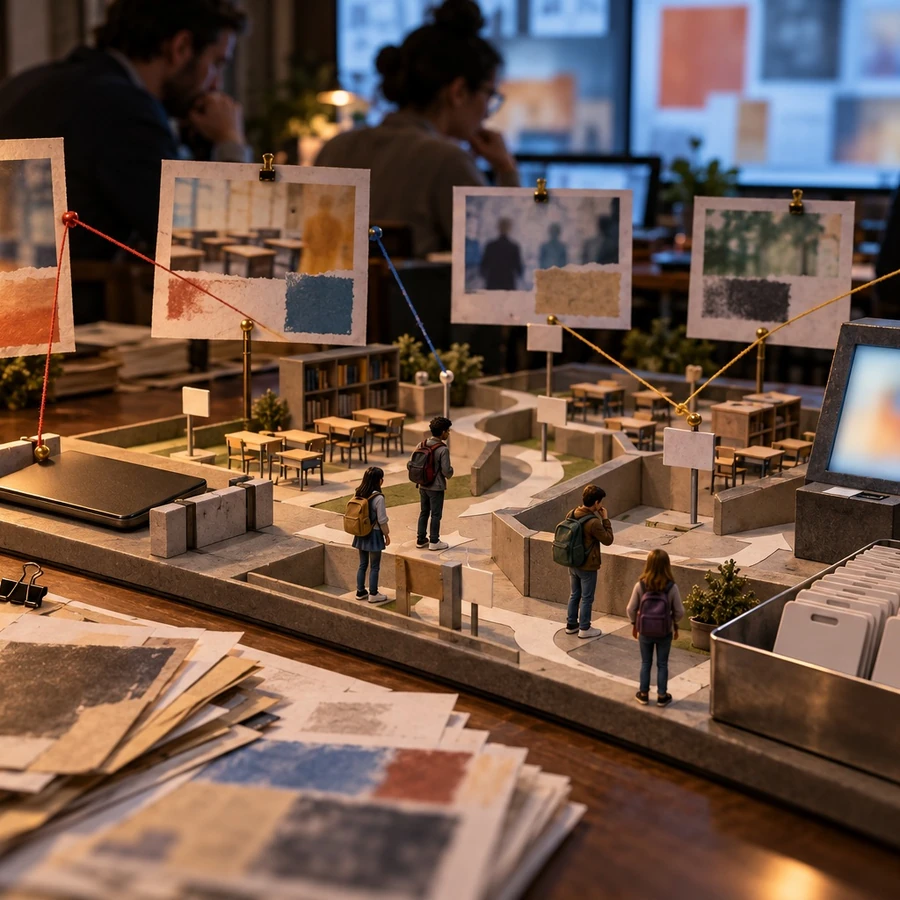
Editorial illustration of people at separate stations with linked display boards and a computer screen.
AI-generated editorial illustration
Research & Science

A smooth AI-assisted answer may hide weak evidence

A learning study found incomplete activity logs and no measured gain in critical thinking. The authors warn that a student survey alone cannot show what learners did or learned.

arXiv · Sep 29, 2026
Beyond PromptingRead story
Editorial illustration of a research workspace with a model classroom, paper records, and a magnifying glass.
AI-generated editorial illustration

More from this edition